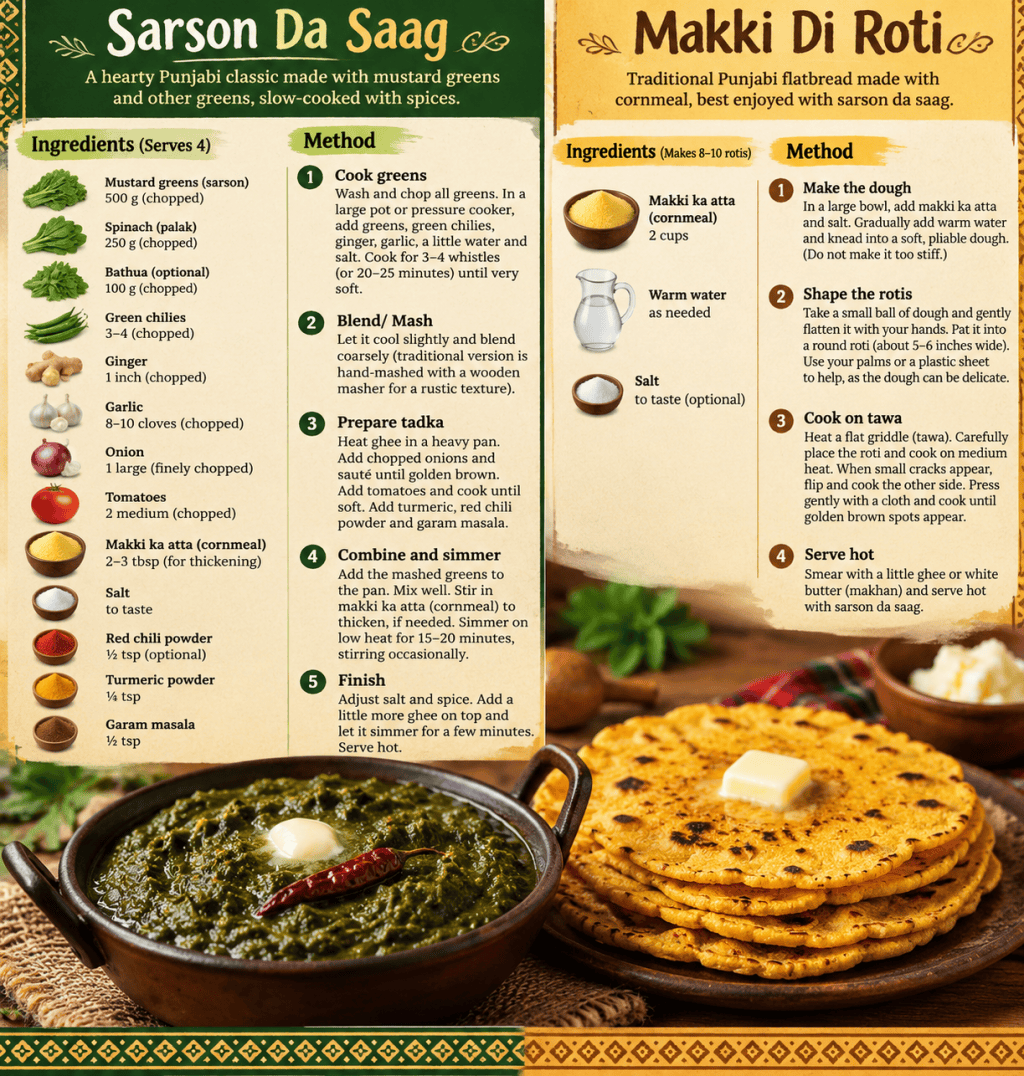
There is something truly comforting about a traditional Punjabi meal, especially when it brings together the earthy flavours of mustard greens and the rustic goodness of cornmeal flatbread. Makki di Roti and Sarson da Saag is one of Punjab’s most loved vegetarian dishes, traditionally enjoyed during the winter months.
This wholesome combination brings together creamy, slow-cooked greens and golden, slightly crisp flatbreads, often served with a generous dollop of homemade white butter (makhan) and a little jaggery (gur) on the side.
Whether you are exploring Punjabi cuisine for the first time or looking to recreate a taste of home, this classic recipe is a wonderful addition to your kitchen.
What Are Makki Di Roti and Sarson Da Saag?
Sarson da Saag is a traditional Punjabi preparation made primarily from mustard greens, often combined with spinach and bathua for a balanced flavour and texture. The greens are cooked until tender, mashed or blended, and simmered with aromatic spices.
Makki di Roti is a rustic flatbread made from makki ka atta, or maize flour. It has a distinctive corn flavour and a hearty texture that pairs beautifully with the rich, earthy saag.
Together, they make a satisfying vegetarian meal that celebrates the simplicity of traditional Punjabi cooking.
Preparation Time and Servings
- Prep time: 20 minutes
- Cooking time: 45–60 minutes
- Total time: Approximately 1 hour to 1 hour 20 minutes
- Servings: 4
- Cuisine: Punjabi, North Indian
- Diet: Vegetarian
Ingredients for Sarson Da Saag
- 500 g mustard greens (sarson), washed and chopped
- 250 g spinach (palak), washed and chopped
- 100 g bathua, optional
- 1 large onion, finely chopped
- 2 medium tomatoes, chopped
- 3–4 green chillies, chopped
- 1-inch piece of ginger, chopped
- 8–10 garlic cloves, chopped
- 2–3 tablespoons maize flour (makki ka atta), for thickening
- ½ teaspoon red chilli powder, optional
- ¼ teaspoon turmeric powder
- ½ teaspoon garam masala
- Salt to taste
- 2 tablespoons ghee or oil
- Water as required
For serving, keep a little white butter or ghee ready.
Ingredients for Makki Di Roti
- 2 cups maize flour (makki ka atta)
- Warm water as required
- Salt to taste, optional
- Ghee or butter for serving, optional
How to Make Sarson Da Saag
Step 1: Prepare the greens
Wash the mustard greens, spinach and bathua thoroughly to remove any dirt. Chop them roughly and place them in a large pot with the green chillies, ginger, garlic, turmeric, salt and a little water.
Step 2: Cook until tender
Cover and cook over medium-low heat until the greens become soft. This usually takes around 25–35 minutes, depending on the greens and the cooking method. Stir occasionally and add a little water if necessary.
Step 3: Mash the greens
Allow the cooked greens to cool slightly. Mash them with a traditional wooden masher or pulse them briefly in a blender for a coarse texture. Avoid blending them completely smooth if you prefer a rustic, traditional consistency.
Step 4: Prepare the tadka
Heat ghee or oil in a separate pan. Add the chopped onion and sauté until golden. Add the tomatoes and cook until soft. Stir in the red chilli powder and garam masala.
Step 5: Thicken and simmer
Add the mashed greens to the pan and mix well. Stir in the maize flour gradually to thicken the saag, adding a little water if needed. Simmer for another 15–20 minutes, stirring occasionally, until the flavours come together.
Step 6: Finish and serve
Taste and adjust the seasoning. Add a small spoonful of butter or ghee if desired. Serve the saag piping hot with freshly made makki di roti.
How to Make Makki Di Roti
Step 1: Prepare the dough
Place the maize flour in a mixing bowl and add salt if desired. Gradually add warm water and knead until the flour comes together into a soft dough.
Maize flour does not contain gluten, so the dough can be more delicate than ordinary wheat dough. Knead gently and prepare the rotis soon after making the dough.
Step 2: Shape the rotis
Divide the dough into 8 equal portions. Roll each portion into a ball.
Place a dough ball between two sheets of parchment paper or on a clean, lightly dampened surface. Gently pat it into a round flatbread, approximately 5–6 inches wide. If cracks appear along the edges, press them together with your fingers.
Step 3: Cook on a tawa
Heat a flat griddle or tawa over medium heat. Carefully transfer the roti onto the hot surface.
Cook until the underside develops golden-brown spots. Flip and cook the other side, pressing gently around the edges with a clean cloth or spatula to help it cook evenly.
Cook until both sides have golden-brown spots and the roti is cooked through.
Step 4: Add a little makhan
Spread a little ghee or white butter over the hot roti, if desired. Repeat with the remaining dough portions.
Serve immediately while the rotis are warm and soft.
Tips for the Perfect Punjabi Meal
- Choose fresh greens: Fresh mustard greens give the saag its characteristic earthy flavour.
- Balance the greens: Spinach softens the strong, slightly bitter taste of mustard leaves.
- Cook slowly: Allowing the saag to simmer gives it a deeper, richer flavour.
- Use warm water for the dough: It helps bring the maize flour together more easily.
- Shape gently: Patting the rotis by hand or between sheets of parchment is often easier than using a rolling pin.
- Serve immediately: Makki di roti tastes best when freshly cooked and served hot.
What to Serve with Makki Di Roti and Sarson Da Saag
For a traditional Punjabi-style meal, serve this combination with:
- Homemade white butter (makhan)
- Jaggery (gur)
- Sliced radish or onion
- Green chillies, if desired
- A glass of chilled chaas or salted buttermilk
These simple accompaniments complement the earthy saag and the distinctive flavour of the cornmeal rotis.
Is Makki Di Roti and Sarson Da Saag Purely Vegetarian?
Yes! This recipe is 100% vegetarian. It uses leafy greens, maize flour, vegetables, herbs and spices, with ghee or butter as optional dairy ingredients.
For a vegan version, substitute the ghee and butter with vegetable oil or a suitable plant-based butter. You can also serve it with dairy-free accompaniments.
Frequently Asked Questions
1. Can I make sarson da saag without spinach?
Yes. You can prepare it mainly with mustard greens, although spinach helps balance the flavour and creates a softer texture.
2. Can I make makki di roti without ghee?
Absolutely. Ghee is optional. You can cook the roti on a dry tawa and serve it without butter for a dairy-free option.
3. Why does makki di roti crack while shaping?
Maize flour lacks gluten, making the dough less elastic. Add warm water gradually, keep the dough soft, and pat the rotis gently rather than rolling them aggressively.
4. Can I prepare sarson da saag ahead of time?
Yes. The cooked saag can be refrigerated in an airtight container and reheated thoroughly before serving. Make the rotis fresh for the best texture.
5. Is this a good vegetarian winter meal?
Yes. Leafy greens provide fibre and several vitamins and minerals, while maize flour provides energy. The overall nutritional value depends on the ingredients and the amount of added fat.
Final Thoughts
Makki di roti and sarson da saag are more than just a meal; they are a celebration of Punjabi food traditions. The earthy greens, rustic cornmeal flatbreads and rich touch of butter create a comforting combination that is simple, satisfying and full of character.
Prepare this traditional vegetarian recipe for your family, serve it hot, and enjoy a little taste of Punjab at your dining table.
Recipe note: For a traditional serving, finish the saag with a little white butter and enjoy it alongside hot makki di roti and jaggery.


Leave a Reply